
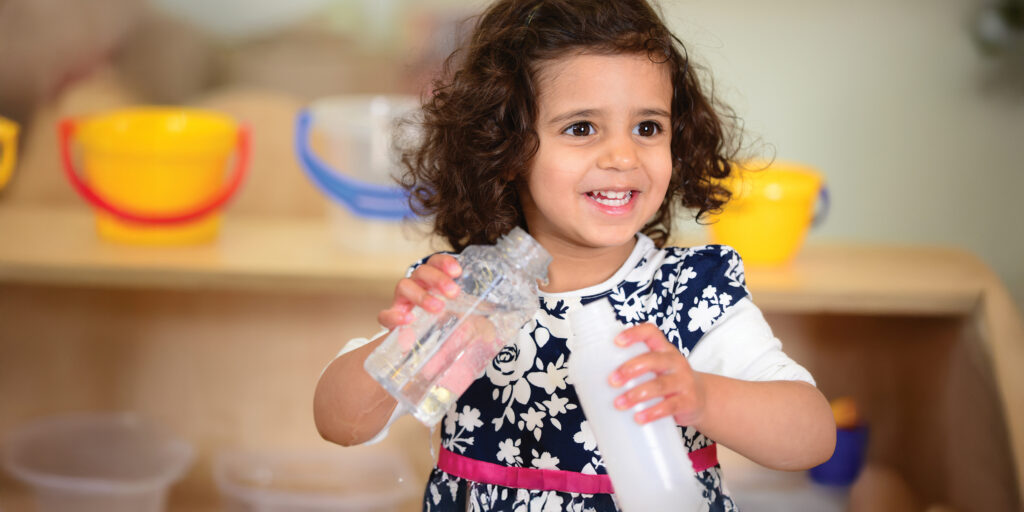
In October 2024 the UK Government announced its School-Based Nursery Capital Grant to establish a total of 3,000 school-based nurseries as part of Government’s Opportunity Mission* to give every child the best start in life.
In September 2025, the DfE announced that the application process is now open for Phase 2 of the School-Based Nursery Capital Grant Programme.
Building on the foundations of the first phase, it has an increased focus on supporting disadvantaged families to access early years provision, and the Government are looking to open at least 300 new or expanded school-based nurseries with the School-Based Nursery Capital Grant programme, who will be ready to offer new childcare places in the 2026-27 academic year.
State-funded primary schools and maintained nursery schools can now apply for a School-Based Nursery Capital Grant of up to £150,000 to create or expand a School-Based Nursery with the application process opening on 22nd September and closing on 11th December 2025. Unlike Phase 1 of the School-Based Nursery Capital Grant, it is no longer a requirement to make use of surplus space in Phase 2.
The first 300 schools were selected in April 2025 and we were delighted to work in partnership with many schools during this first phase. Some invested in a Complete Nursery Classroom with their School-Based Nursery Capital Grant as a rapid solution, others have worked with our Curriculum Consultants to create a truly bespoke plan that met their exact needs, budget and space – and others opted to simply top up on furniture, storage and age-appropriate resources through the website. If you are thinking about applying for funding in Phase 2, please do get in touch to discover how we can support you right from the start of the process.
We were privileged to work with many schools in Phase 1 of the School-Based Nursery Capital Grant programme. Every project was varied and unique, and they are already having a positive impact and benefitting children and families in the local community. We asked just a few of these schools to share their thoughts, images and videos to celebrate their story in a case study. Why not take a look at their success – and hear their top tips for the application process!
A Quick, Effective and Complete Nursery Classroom Solution
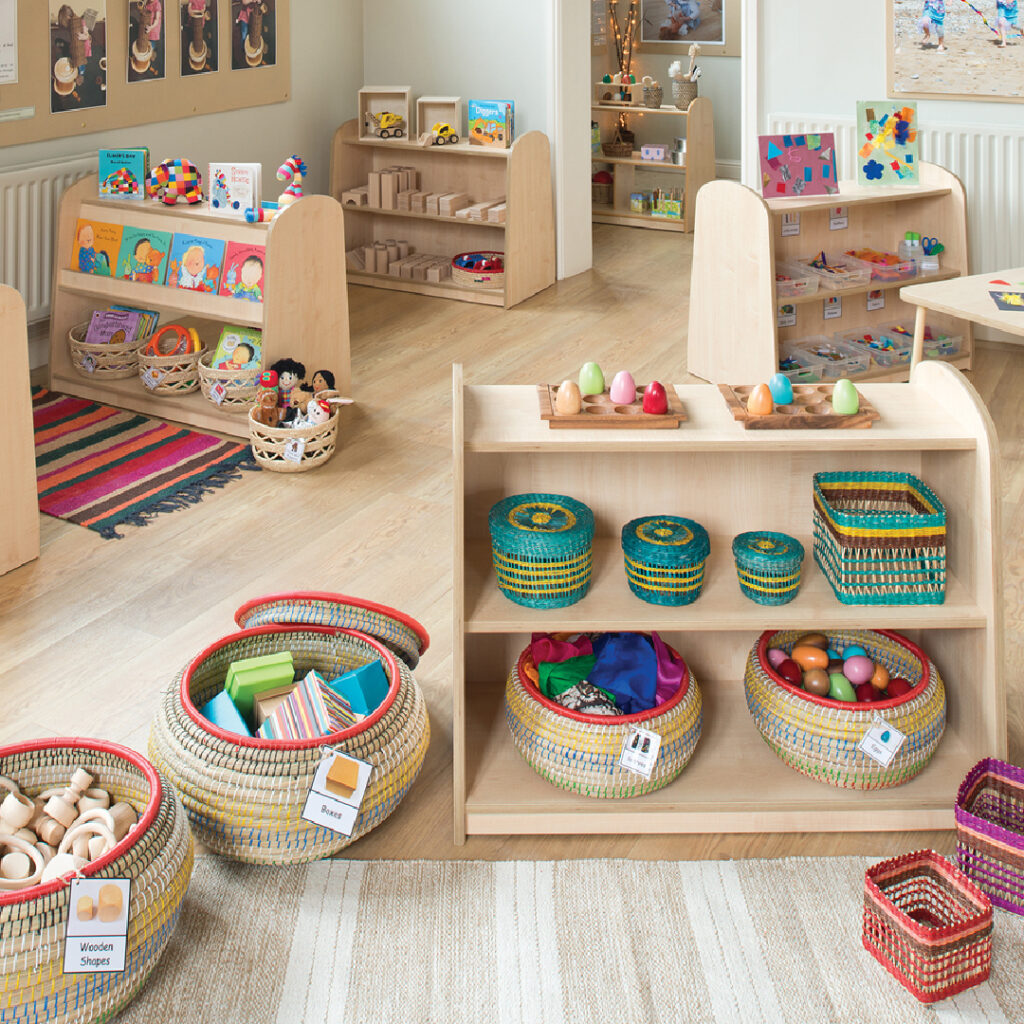
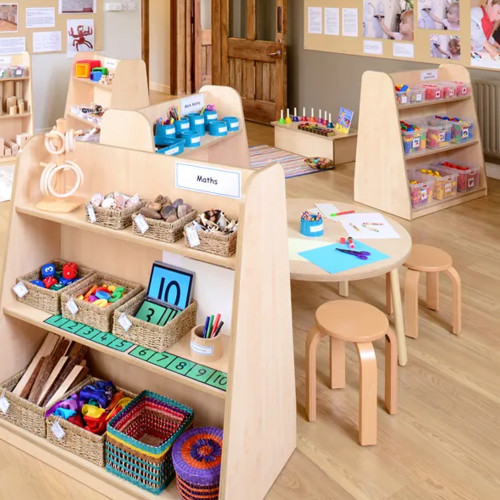
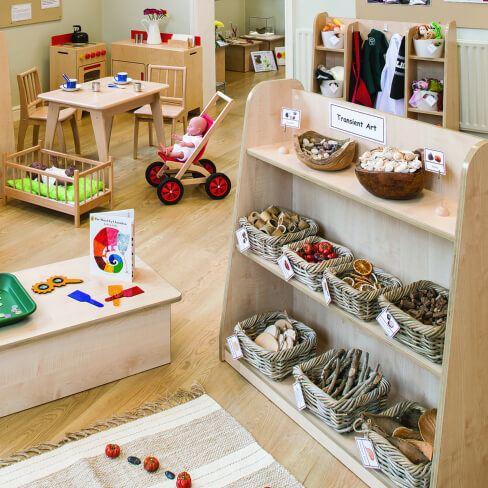
If you are applying for a School-Based Nursery Capital Grant, Early Excellence are here to help! You will need to include costings for all necessary furniture, resources and storage for your nursery classroom, and the Early Excellence range of Complete School-Based Nursery Classrooms offers the perfect solution! We can provide high-quality nursery furniture, inspiring early years resources, and ready-made storage sets in one complete package.
Developed by the highly experienced Early Excellence Curriculum Consultants, these Complete Nursery Classrooms are specifically curated for children 2-4yrs, ensuring your nursery is equipped for the unique developmental needs of this age group. They are designed to help you quickly and cost-effectively establish a purposeful learning environment.
Prices start from £8,050 + VAT and can include a free Room Plan with one of the team once you order. We deliver straight into your classroom and lay out the furniture to match the room plan!
Invest in your curriculum. Invest in children’s learning. Invest in quality that lasts.
The Early Excellence Guide to Applying for the School-Based Nursery Capital Grant
1. Purpose of the Funding
- For creating or expanding nursery provision.
- Must be used for capital costs: one-off investments that provide lasting benefit.
- Not for recurring operational costs (staff salaries, utilities, consumables).
2. Eligible vs Ineligible Costs
| Eligible Costs (Capital/One-off) | Ineligible Costs (Operational/Recurring) | Notes / Tips |
| Indoor: Renovation of classrooms, storage, large furniture, lighting, safety improvements | Staff salaries, utility bills, cleaning | Focus on long-term improvements that enhance learning |
| Outdoor: Play equipment, climbing frames, gardens, sand/water play areas, landscaping | Consumables (sand, water, art supplies) | Show how outdoor space supports EYFS learning goals and child development |
| Technology or learning resources with lasting benefit | Snacks, meals, refreshments | Must have lasting impact |
| Structural improvements (safety installations, flooring, fences) | Routine maintenance or minor repairs | Must contribute directly to nursery environment |
| One-off large equipment purchases that last several years | Replacing consumables or everyday items | Highlight durability and educational value |
3. Indoor and Outdoor Use
- Both indoor and outdoor improvements are eligible if part of the nursery provision.
- Demonstrate how your plans support EYFS learning goals and child development to strengthen your application
4. Suppliers
- Schools usually have flexibility in choosing suppliers.
- Conditions:
- Purchases must be for capital items.
- Follow school financial regulations and procurement rules (e.g., multiple quotes for high-value items).
- Projects must meet DfE/EYFS safety, accessibility, and suitability standards.
- Local authorities may require pre-approved suppliers for building works – check first.
- Consider quality over cost: Focus on durable, compliant furniture and resources that will last
- Work with suppliers with expertise in early childhood development, this will save time and strengthen your application.
5. Combining School-Based Nursery Capital Grant with Other Budgets
- This is allowed and encouraged to create larger or more ambitious projects.
- It shows efficient use of resources and improves the value-for-money score
- Rules:
- SBN Grant must only cover eligible items.
- Other funds must be kept separate.
- Map out funding allocation clearly to avoid overspending.
Key Takeaways
- Think long-term investment: focus on improvements and equipment that last.
- Both indoor and outdoor spaces are eligible.
- Quality and compliance matter more than the cheapest option.
- Combining funding sources is allowed but must be clearly mapped.
- Demonstrate educational impact for a stronger application.
Deadlines & Timelines for School-Based Nursery Capital Grant (Phase 2 – 2025/26)
Application Window
- Opened: 24th September 2025 at 10:00 AM
- Closed: 11th December 2025 at 5:00 PM
Top Tip: Prepare in advance and collect:
- Local authority approvals
- Landowner permissions
- Cost estimates
- Project designs
Rushing can risk missing the deadline or submitting incomplete applications.
Late applications will not be accepted, you will have to wait until Phase 3 to apply.
Spending the Grant
- Deadline to spend funds: 1st September 2027
- The DfE expects that your school-based nursery will be operational by September 2026 so you may complete the essential elements first, then finish additional features across 2026/27
- Any unspent funding may be clawed back by the Secretary of State for Education.
Top Tip: Start the project promptly after approval to allow time for:
- Procurement
- Construction
- Handling unforeseen delays
Practical Considerations for Your Application
1. Focus on Clarity, Compliance & Impact
A strong application demonstrates that:
- Your project is clear and well-planned.
- It complies with all DfE/EYFS standards.
- It will have a positive impact on childcare and learning in your local area.
2. Steps to Improve Your Application
| Step | Action / Tip |
| Read & follow guidance | Align your project with DfE objectives for nursery expansion and quality. |
| Complete the online application thoroughly | Fill all fields and include required supporting documents. |
| Show educational benefit | Explain how your nursery will improve learning outcomes, increase childcare spots, and meet EYFS standards. |
| Include detailed costings | Provide realistic quotes and budgets for all capital items. |
| Demonstrate readiness | Show that planning, permissions, and approvals are in place, proving the project can start immediately once approved. |
| Highlight indoor & outdoor provision | Describe how the project will create seamless indoor-outdoor integration for free-flow play and learning. |
| Ensure compliance | Check with suppliers that all safety, accessibility, and regulatory requirements are met. |
3. Tips for Schools
- Work with experienced suppliers or design partners like Early Excellence to ensure:
- Compliance with EYFS and safety standards
- High-quality designs
- Clear demonstration of project value to the DfE
- Early planning and preparation reduces delays and increases chances of approval.
Practical Guidance on Project Costs, Record-Keeping & Inspections
1. Project Costs Exceeding the School-Based Nursery Capital Grant
- Additional funding: If your project costs more than the grant, you can use:
- School budgets or reserves
- Other grants or funding sources
- Phasing projects: Complete essential parts first, then add improvements later.
- Important: The DfE will not increase the grant to cover extra costs.
Top Tip: Create a detailed budget and phased plan before applying. This ensures the project stays within grant limits while maximising impact.
2. Evidence of Spending
Schools must keep detailed records to show how the School-Based Nursery Grant was used.
Required evidence includes:
- Invoices, receipts, and quotes for all purchases/installs
- Records showing which items were funded by the School-Based Nursery Capital Grant vs other sources
- Photographs of completed works or installed equipment
- Planning approvals, permissions, or compliance certificates
Top Tip: Set up a tracking folder or spreadsheet from the start. Record each purchase, its purpose, and attach supporting documents. This makes reporting and audits stress-free.
Compliance & Regulations for the School-Based Nursery Capital Grant
1. EYFS Compliance
All spaces and equipment funded through the School-Based Nursery Capital Grant must meet Early Years Foundation Stage (EYFS) requirements to ensure a safe, accessible, and high-quality learning environment.
Key areas to consider:
- Safety and accessibility: Equipment and spaces must be suitable for EYFS children.
- Space requirements: Adequate usable space per child and smooth indoor-outdoor free-flow.
- Learning environment: Support EYFS learning goals such as role-play, reading, and creative exploration.
- Sanitation and hygiene: Age-appropriate toilets, sinks, and handwashing facilities that meet regulatory standards.
Tip: Work with experienced suppliers to ensure all design elements align with EYFS guidelines, simplifying compliance and strengthening your application.
2. Minimum Space & Facility Standards
All School-Based Nursery Capital Grant funded nurseries must meet minimum standards for safety, accessibility, and learning quality:
- Indoor space: Sufficient floor space per child for play and group activities.
- Outdoor space: Safe, accessible, and directly connected to the nursery.
- Furniture & resources: Age-appropriate tables, chairs, storage, and play resources.
- Hygiene facilities: Child-sized toilets, sinks, and handwashing stations.
- Safety measures: Safe surfaces, proper lighting, ventilation, and fire safety.
Top Tip: Experienced suppliers can design and install facilities that meet both EYFS and minimum space standards, strengthening your funding application.
3. Accessibility Requirements
School-Based Nursery Capital Grant funded spaces must be fully accessible for all children, including those with disabilities or additional needs.
Accessibility features may include:
- Ramps and safe pathways
- Accessible toilets and sinks
- Wheelchair-accessible spaces
- Inclusive learning resources
Financial & Budgeting for the School-Based Nursery Capital Grant
1. Maximum Funding
- Phase Two Limit: Each school can apply for up to £150,000.
- Allocation: The Department for Education (DfE) decides the amount based on your provided costings and eligibility.
- Any unspent School-Based Nursery Capital Grant must be returned to the DfE.
- Misuse or reallocation can affect eligibility for future grant rounds.
2. Cost Increases After Grant Approval
- Schools must cover any cost increases using their own budget, other grants, or fundraising.
- The grant cannot be increased once awarded.
3. VAT Considerations
- State-funded schools: Cannot reclaim VAT on capital expenditure.
- Academies or VAT-registered schools: May be able to reclaim VAT on eligible purchases.
- Action: Always check with your finance team or HMRC guidance before ordering equipment or services.
Top Tip: Include VAT considerations in your project budget early to avoid overspending and ensure funding is fully utilised.
Impact & Outcomes – School-Based Nursery Capital Grant
The School-Based Nursery Capital Grant isn’t just about building spaces; it’s about creating lasting educational impact, improving inclusion, and demonstrating measurable benefits for children.
1. Improving Children’s Learning Experiences
- The School-Based Nursery Capital Grant is designed to provide safe, stimulating, and well-resourced spaces for EYFS children.
- Focus is on enhancing learning, play, and development, not just creating childcare places.
Top Tip: In your application, clearly demonstrate how the project will benefit children’s learning, development, and overall nursery experience.
2. Supporting SEN and Disadvantaged Pupils
- Funded facilities should be inclusive and accessible, supporting children with Special Educational Needs (SEN) and those from disadvantaged backgrounds.
- Phase Two encourages projects that increase childcare access in deprived areas, boosting chances of successful applications.
Top Tip: Highlight inclusion, accessibility, and the number of disadvantaged children your nursery will support in your application.
3. Influence on Ofsted Ratings
- Improved nursery facilities can positively affect Ofsted inspections by showing:
- Enhanced learning environments
- Compliance with EYFS guidelines
- Staff effectiveness
- Inclusion and accessibility
Top Tip: While facilities alone won’t guarantee higher ratings, combining them with quality teaching and leadership strengthens evidence of high-quality early years provision.
4. Evidence to Show Impact
Schools should demonstrate that funding was effectively used to improve nursery provision:
- Before-and-after photos – classrooms, outdoor spaces, or equipment.
- Records of purchases/installations – invoices, receipts, and quotes.
- Observations or assessments – document children’s learning and progress in the new environment.
- Feedback – from staff, parents, or children on improvements.
- Project reports – summarize objectives, implementation, and measurable outcomes.
Top Tip: Maintain a project impact folder from the start to save images, files, and documents. This supports inspections, reporting, and future funding applications.
How Early Excellence Can Support Your School-Based Nursery Project
Early Excellence are here to guide you throughout the process when applying for the School-Based Nursery Capital Grant. We;
- Are specialists in EYFS environments
- Create tailored designs for both indoor and outdoor spaces
- Support from start to finish we help schools from planning to installation
Services include:
- Free consultations – to evaluate indoor/outdoor spaces and generate ideas.
- Project planning & budgeting – Realistic plans to maximize your School-Based Nursery Capital Grant funding
- Design expertise – Bespoke indoor/outdoor layouts
- Phase One experience – we supported many of the schools in Phase 1 of the School-Based Nursery Capital Grant
- Professional installation – from our vastly experience team
Once your School-Based Nursery Capital Grant is approved, projects can typically be scheduled within 2 weeks, depending on scope and capacity.
Create an Outstanding Nursery Classroom
Learn more about rapidly creating inspirational and enriching learning environments for 2-4 yrs.
Talk to us today to explore which of our nursery solutions will work for your classroom space.
A Complete Nursery Classroom Service
An invaluable resource for any school looking to establish Nursery Classrooms is the Early Excellence Guide to Continuous Provision 2-3yrs, which offers practical advice to support both Senior Leaders and early years professionals. Packed with information, activities, and planning tools; this guide will help you ensure that your nursery is a rich, carefully resourced and well managed space to meaningfully and appropriately support your children’s needs.
Don’t forget that high quality EYFS training and CPD will be a crucial part of your preparation. Early Excellence offer a range of options from bespoke face-to-face training and consultancy to a comprehensive webinar programme. They are packed with essential knowledge and understanding to ensure effective teaching and learning alongside practical ideas, advice and inspiration to inform and refresh practice.
Discuss Nursery Classroom Options
Talk to us today to explore which of our nursery solutions will work for your classroom space and for your children.
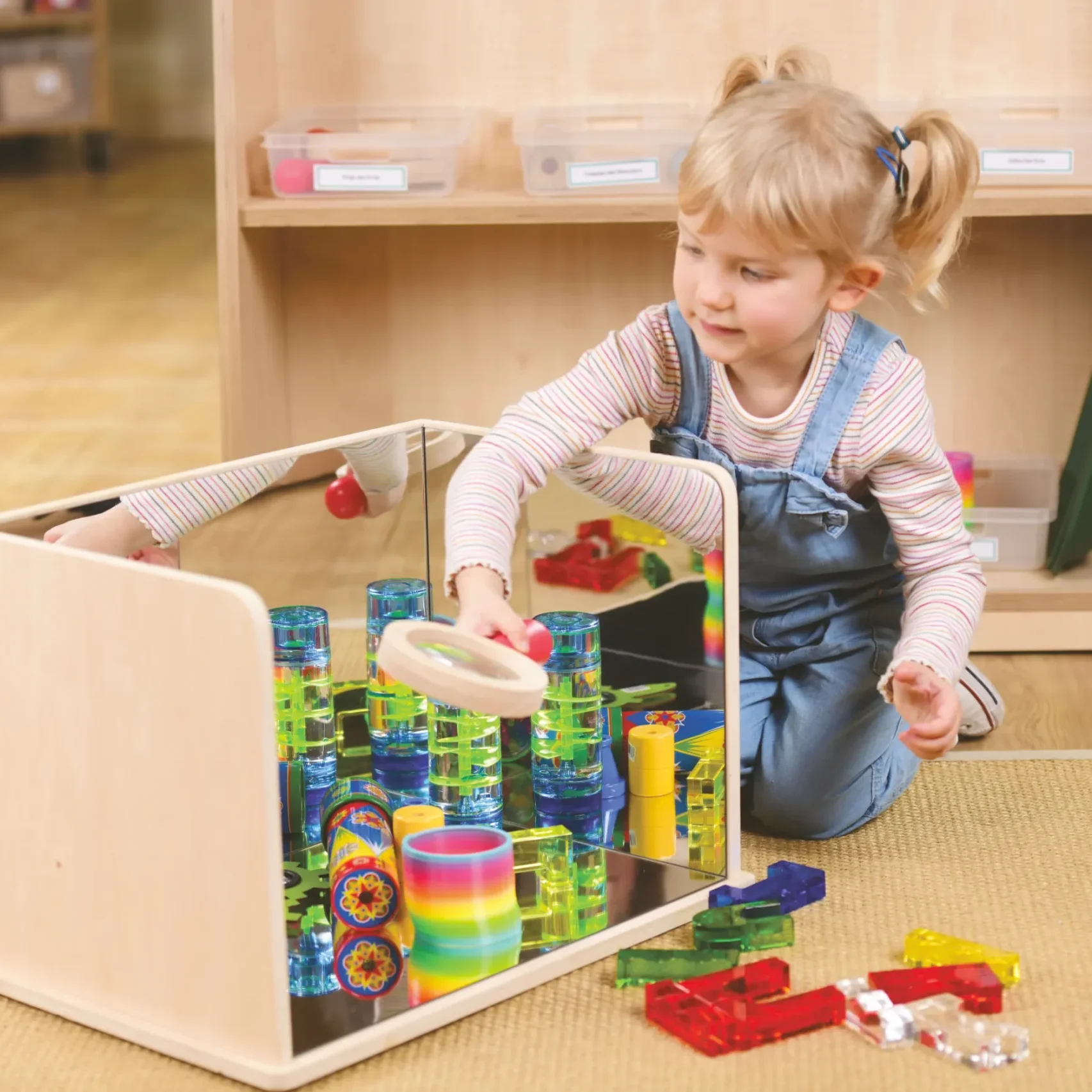
Read a Transformational Case Study
Don’t just take our word for it, hear from Lynsey Hadfield at Rawmarsh Nursery who elevated her 2-year-old provision.
Browse Nursery Classroom Collections
Learn more about Complete Nursery Classroom Sets, to rapidly establish areas of Continuous Provision.
DfE School-Based Nurseries Plan
*By investing in early years education, Opportunity Mission seeks to reduce the gap between background and opportunity.
The Department for Education has projected the need for 70,000 additional nursery places and 35,000 early years educators. Many local areas will need to increase their capacity by 10-20% to meet demand by September 2025, with some lower-income areas requiring an uplift of over 20%.
This new funding is designed to address these urgent needs, helping schools and local areas to prepare for the expected increase in demand. It also ensures that no child or family is left without access to quality early years education, regardless of their background or location.